Power
Autori:

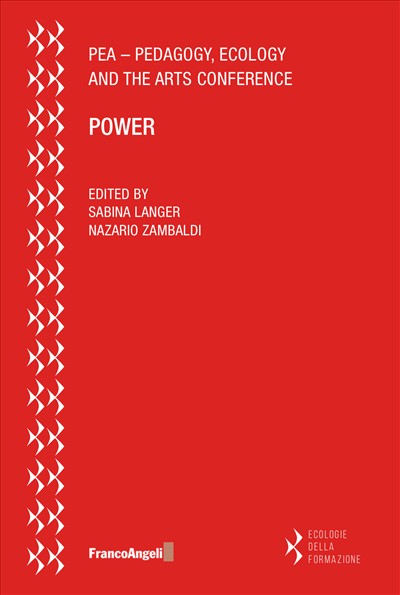
PEA – Pedagogy, Ecology and the Arts Conference

A cura di: Sabina Langer, Nazario Zambaldi

Power

The idea of choosing POWER as the focus of the third PEA—Pedagogy, Ecology and the Arts conference in Merano (Italy) stems from an interest in exploring power as a relational, educational, ecological, and creative force. Rather than understanding power solely as domination, authority, or control, the conference invited contributors to investigate how power can be exercised responsibly, shared collectively, and transformed through pedagogical, ecological, and artistic practices.

Pagine: 320

ISBN: 9788835198192

Edizione:1a ediz 2026

Codice editore: 10359.6

Informazioni sugli open access
The idea of choosing POWER as the focus of the third PEA–Pedagogy, Ecology and the Arts conference in Merano (Italy) stems from an interest in exploring power as a relational, educational, ecological, and creative force. Rather than understanding power solely as domination, authority, or control, the conference invited contributors to investigate how power can be exercised responsibly, shared collectively, and transformed through pedagogical, ecological, and artistic practices.
Educational processes–both formal and informal–play a fundamental role in cultivating critical awareness and enabling more participatory, ethical, and sustainable ways of exercising power. Across educational, artistic, and community contexts, there is a growing need to rethink power as a shared and transformative practice that supports coexistence among humans and the more-than-human world.
At PEA 2025, we explored the many dimensions of power through the lenses of pedagogy, ecology, and the arts. The chapter authors are researchers and practitioners from across Europe and beyond, each engaging with two or all three PEA pillars. The book is structured around these themes, highlighting the focus of each chapter. The conference contributions–keynotes, oral presentations, and workshops–have been reworked for this volume and enriched through the dialogue and exchange that took place during the conference. We hope readers will sense the convivial and interactive spirit that continues to shape the PEA community.

The PEA conference aims to bring together learning and education, ecological thinking, and the visual and performing arts to explore human and more than-human conditions in innovative ways, from both individual and societal perspectives. The initials of the three core themes–Pedagogy, Ecology, and the Arts–form the acronym PEA: a small, round, green legume. The curators appreciate this play on words for its irony and humility–a reminder of the power of being small yet united. Like a single pea, an individual can do little alone; it is through connection with the others, with community and with the world, that meaningful change becomes possible.

Sabina Langer and Nazario Zambaldi, Power. PEA – Pedagogy, Ecology and the Arts

Keynotes

Peter Mayo, Lifelong Learning, Power, and Sustainable Development
Lorenzo Bernini, We with Freud. Sex, Power, the Black Hole
Tiziana Rita Morgante, Power and Domination. A Pair Still to Be Explored Through the Work of Danilo Dolci

Pedagogy

Lavinia Bianchi, A Decolonial Reading of Academic Positioning. Autoethnography and Resistance in Education
Sezen Çakmak, Negotiating Parenthood Within Power Relations. Agency Among Muslim-Marked Parents in Schools
Sonja Wodnek, Dialogical Participation in Schools. Learning Development Discussions as Time-Spaces of Power
Francesco Ciociola, Antioco Luigi Zurru and Stefanie Roos, Orientation/Control as Power in Education. Cultural Reflections on Schooling
Sandra Matschnigg-Peer and Tamara Peer, Conceptualizing Power in Urban Educational Networks
Laura Corbella and Maria Cristina Mecenero, The Power of Emotions at School. A Duo-ethnographic Study
Jeanette Hoffmann and Elisabeth von Leon, Empowerment Through Children’s Literature in Pedagogical Contexts
Brigitta Pia Alioto, Feedback as Pedagogical Power: Error, Language, and Growth Mindset in Organizational Learning
Tamara Peer, Sandra Matschnigg-Peer, Petra Rauschenberger and Katharina Krämer, Power/Dynamis. Entering the Primary School Teaching Profession
Paola Valeria Crespi, Thumbelina Is Here to Stay. Power, Creativity, and Artificial Intelligence in Contemporary Classrooms
Giulia Mirandola, Monica Galiè and Cecilia Cavallo, Pioneers. Democratic Education Through Critical Thinking and Multilingual Approach
Elena Bergonzini, Control in Education
Lucia De Marco and Giovanna Fontana, Communication and Power in Gender Relations

Ecology

Pietro Corazza, How to Rethink Education and Power in the Age of Climate, Ecological and Social Collapse?
Pietro Caresana, Beyond Subjugation. An Unconscious Path to Freedom
Letizia Luini, Greta Persico, Andrea Galimberti and Monica Guerra, Redistributing Power in Biodiversity Education. Toward Participatory and Child-Led Learning
Francesca Rota, Sustainability, Education, and Children’s Empowerment. Pedagogical Reflections
Francesco V. Ferraro, Inspiratory Muscle Training and Balance in Ageing. From Evidence-Based Research to Lived Experience and Participant Empowerment
Giovanna Fontana and Lucia De Marco, The Power of Scientific Language. A Civic Education Project to Teach Biotechnology

The Arts

Nazario Zambaldi, The Power of Theatre as a Phenomenological and Transformative Practice. Casa Basaglia
Karla Louisa Stolle, Resonant Presence and Future Developments. About the Power of Music Education and Glimpses of the Future Across Europe
Ulrike Barth, Isabel Schmier and Angelika Wiehl, Empowerment. Self & Social Effectiveness Through Artistic Status Work
Giovanna Malusà and Carlo Tamanini, 3(En)action. An Enactive Approach Linking Univer-sity, School, and Museum in Teacher Education
Chiara Massullo, From Ego to Eco. Practice-Based Steps Towards a Relational Pedagogy
Antonina Eugenia Ferruzza Marchetta, Dance Movement Therapy Workshops. Embodied Learning for Empowerment in University
Maria Laura Belisario, From the Power of Sound to the Sound of Power. An Artistic Experience
Marco Salvadore, The Power of Children’s Artistic Experience for Education for Sustainability
Nicola Morandini, The Light Within the Shadow

The Authors

Contributi: Brigitta Pia Alioto, Ulrich Barth, Maria Laura Belisario, Elena Bergonzini, Lorenzo Bernini, Lavinia Bianchi, Sezen Çakmak, Pietro Caresana, Cecilia Cavallo, Francesco Ciociola, Pietro Corazza, Laura Corbella, Paola Valeria Crespi, Lucia De Marco, Francesco Vincenzo Ferraro, Antonina Eugenia Ferruzza Marchetta, Giovanna Fontana, Monica Galiè, Andrea Galimberti, Monica Guerra, Jeanette Hoffmann, Katharina Krämer, Letizia Luini, Giovanna Malusà, Chiara Massullo, Sandra Matschnigg-Peer, Peter Mayo, Maria Cristina Mecenero, Giulia Mirandola, Tiziana Rita Morgante, Tamara Peer, Greta Persico, Petra Rauschenberger, Stefanie Roos, Francesca Rota, Marco Salvadore, Isabel Schmier, Karla Louisa Stolle, Carlo Tamanini, Elisabeth von Leon, Angelika Wiehl, Sonja Wodnek, Antioco Luigi Zurru

Collana: Ecologie della formazione - Open Access

Argomenti: Didattica, scienze della formazione

Potrebbero interessarti anche